A Century Later, the Conversation Continues
Writers and Readers Gather in New York to Celebrate The Sun Also Rises and the Enduring Voice of Ernest Hemingway
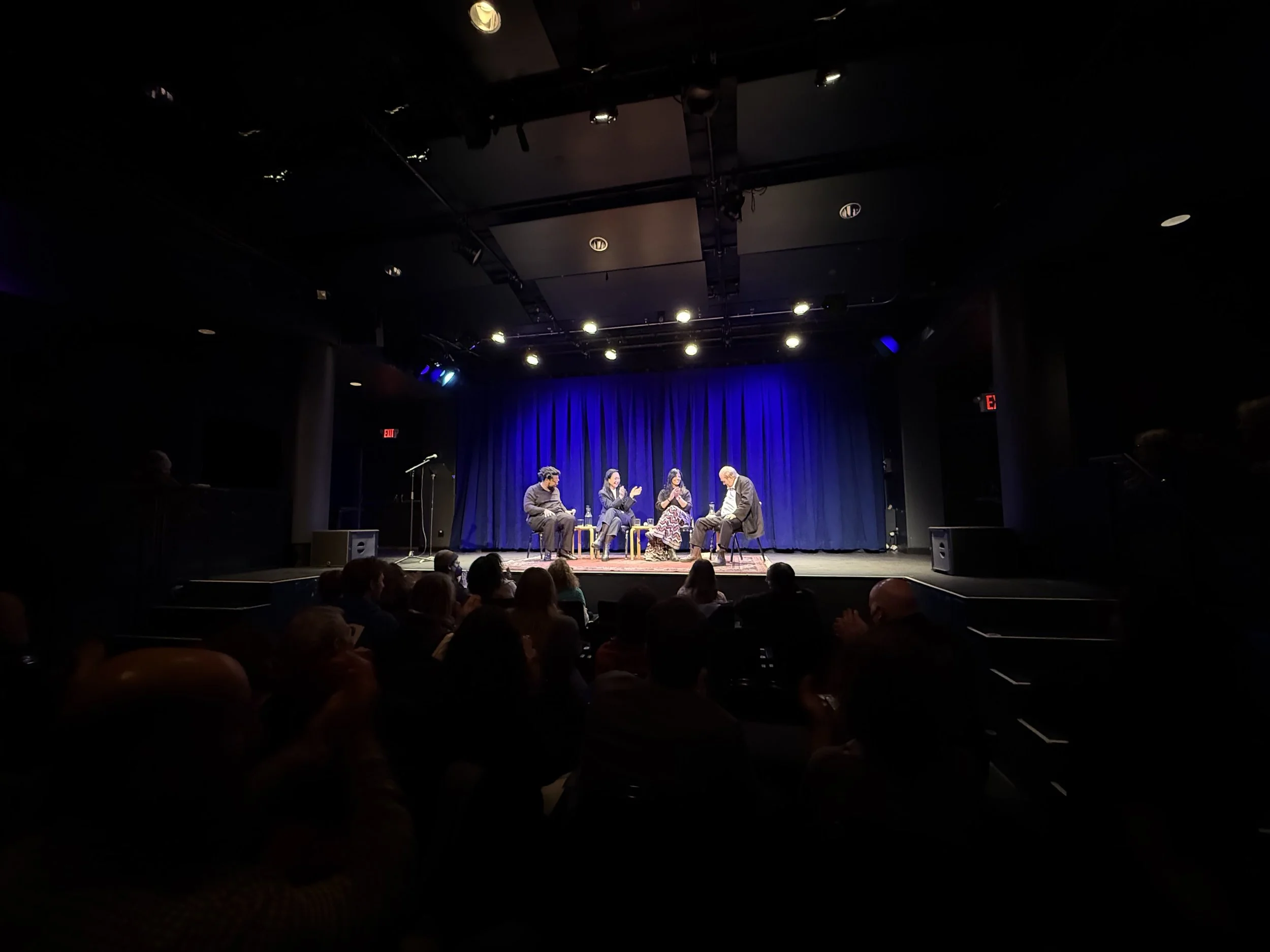
Recently, as snow fell in New York City, readers in search of warmth and conversation trekked to the Upper West Side’s Symphony Space. The occasion was a special installment of the Thalia Book Club, a centennial celebration of Ernest Hemingway’s The Sun Also Rises.
The night began with a reading by actor and playwright Jay O. Sanders. His delivery captured the famous clipped cadence of the text, a style that, a century later, still feels remarkably modern in its austerity.
Following the reading, a panel of luminary authors took the stage including Vinson Cunningham, Mira Jacob, Min Jin Lee, and Colm Tóibín. They did not simply discuss the novel as a historical artifact. Instead, they treated it as a living work of literature that still sparks debate and interpretation.
The conversation moved through the contradictions that define the novel. The panelists explored the restless longing of the expatriates and the deep disillusionment that followed the First World War, questioning how a story set entirely in Europe could remain so unmistakably American.
Much of the discussion centered on the character of Lady Brett Ashley and her complicated magnetism. The panelists examined her portrayal carefully, weighing her independence and sense of agency against the ways modern readers sometimes struggle with Hemingway’s treatment of gender and cultural identity.
The writers also reflected on Hemingway’s famous style. His revolutionary minimalism stripped away ornament and changed the rhythm of the American sentence. The panel noted that this spareness creates space for readers to bring their own interpretations to the story, which helps explain why the novel still feels alive after one hundred years.
By the time the floor opened for questions, the discussion had shifted toward the title’s origins in the Book of Ecclesiastes and the sense of cyclical time it suggests.
The evening ultimately became an intimate and thoughtful exchange between writers and readers. One hundred years after its publication, The Sun Also Rises proved that it is not simply a classic of American fiction but a novel that continues to provoke, challenge, and illuminate.
Paige Fuhrman
Scribner Books