Ernest Hemingway and F. Scott Fitzgerald: A Friendship Forged in Paris
In the Spring of 1925, two young American writers met in a city still healing from war. What followed was a friendship marked by admiration, rivalry, and lasting literary impact.
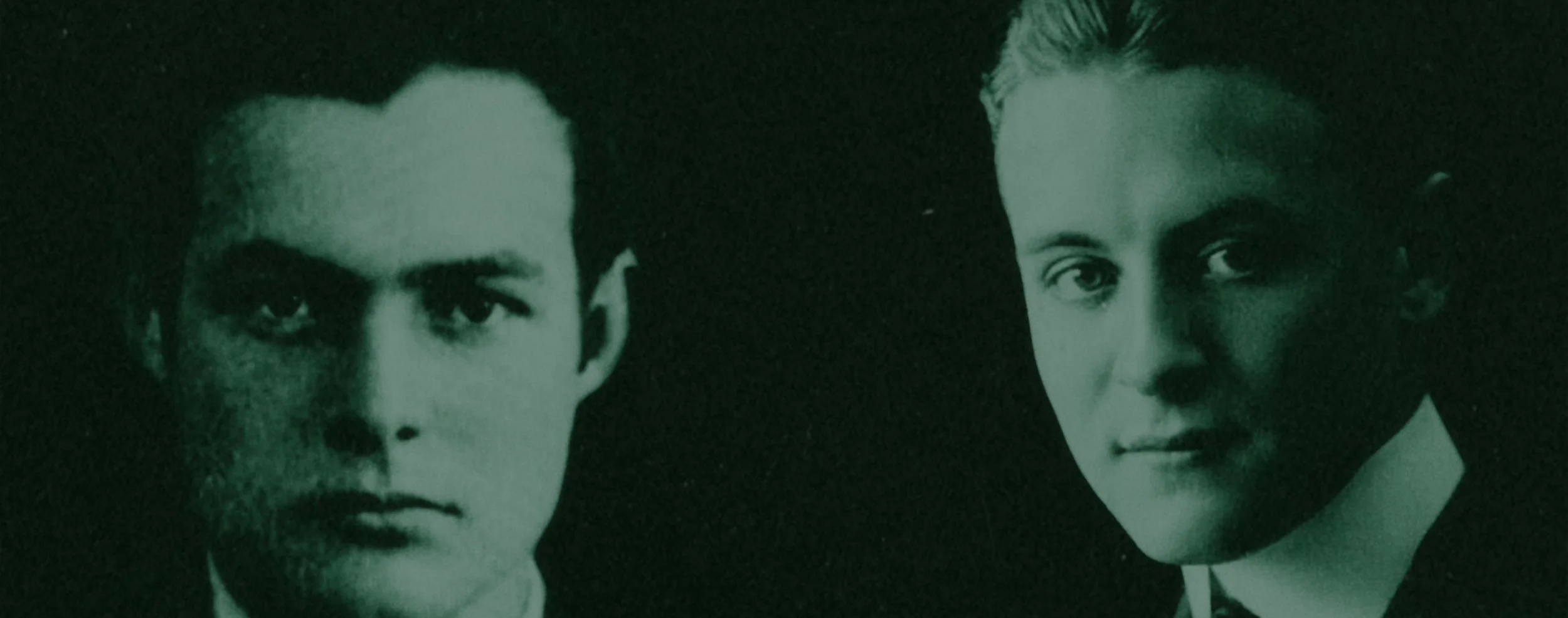
In the years following World War I, Paris became a gathering place for expatriates who felt like leftovers of a shattered generation. Many were veterans, artists, and writers trying to make sense of a world that no longer felt stable or certain. They filled the cafés of the Left Bank with manuscripts, arguments, and long afternoons of wine and ambition. It was in this atmosphere, in the spring of 1925, that Ernest Hemingway met F. Scott Fitzgerald for the first time.
Hemingway was the younger writer, lean and hungry, still shaping the spare style that would soon redefine American fiction. Fitzgerald was already famous, buoyed by the success of The Great Gatsby, polished, charming, and carrying the weight of early literary celebrity.
Their introduction came through mutual friends in the tight circle of writers and artists orbiting the Left Bank. What followed was not a simple friendship, but something more layered and deeply human. Fitzgerald admired Hemingway’s raw talent and direct prose. Hemingway respected Fitzgerald’s lyrical gifts and instinct for structure. Each saw in the other a reflection of ambition and vulnerability.
Fitzgerald proved generous in those early days. He introduced Hemingway to his editor, Maxwell Perkins at Scribner’s, and championed his work with genuine enthusiasm. It was Fitzgerald who helped smooth the path for Hemingway’s first major publications in the United States. In quiet, practical ways, he believed in his friend’s promise.
Yet admiration was often complicated by insecurity. Fitzgerald struggled with self-doubt and the pressures of fame. Hemingway, fiercely independent, sometimes bristled at what he saw as Fitzgerald’s fragility and the turbulence of his marriage to Zelda. Their evenings together were fueled by conversation and alcohol, by big ideas about literature and life. Beneath the camaraderie, however, lay competition and two very different temperaments.
Hemingway would later write about Fitzgerald in A Moveable Feast, recalling their Paris years with a mixture of tenderness and sharp honesty. Even in those pages, where memory and myth blur, there is unmistakable affection. He recognized Fitzgerald’s brilliance and the burden he carried. Fitzgerald, for his part, never stopped believing in Hemingway’s greatness.
Their friendship cooled over time, shaped by distance, success, and personal struggles. Yet the bond they formed in Paris left a lasting imprint on both men. It was a relationship born of shared hunger in the aftermath of war, sustained, however imperfectly, by mutual respect. Paris gave them a meeting place. Literature made them immortal.