
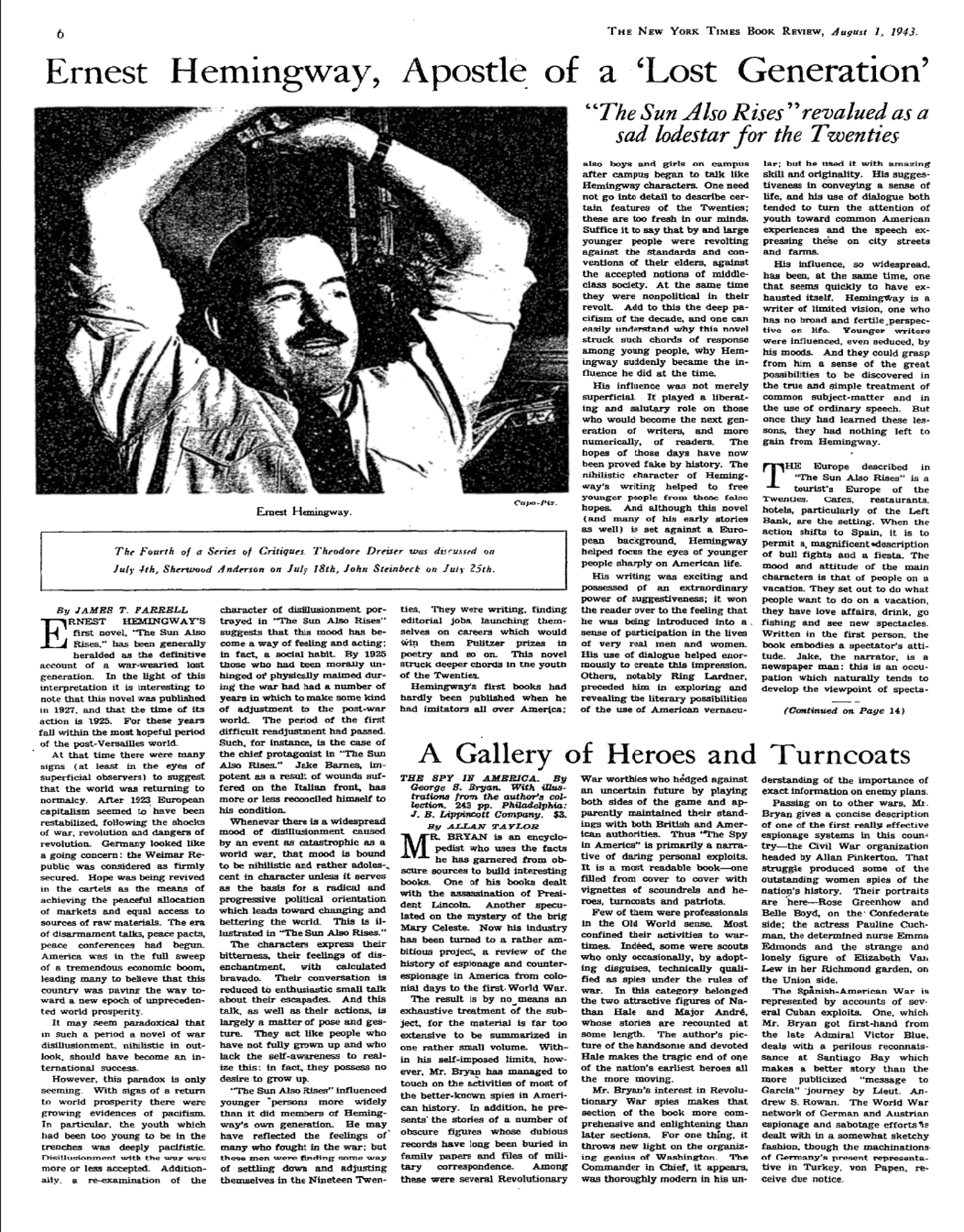
Seventeen years after The Sun Also Rises first appeared, novelist James T. Farrell returned to it in a piece for The New York Times, this time as a document of a bygone decade. Writing in the middle of a second world war, Farrell traced how Hemingway’s disillusioned expatriates had shaped the voice and vernacular of a generation of younger writers. It’s a rare thing: one major literary voice taking the full measure of another, sixteen years into the reckoning.
Apostle of a Lost Generation: Hemingway Reassessed at Mid-Century
Next
Next