Into the Wild: Hemingway’s First African Safari
The journey that reshaped his life, inspired legendary stories, and helped define the Hemingway story
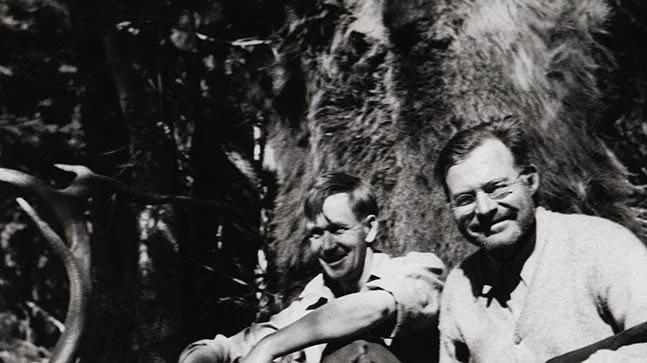
In June of 1933, Ernest Hemingway embarked on what would become one of the most transformative adventures of his life: his first trip to Africa. Already an internationally recognized author by this point, Hemingway arrived in East Africa searching for more than sport or escape. He was searching for experience, challenge, inspiration, and perhaps even a renewed sense of himself.
Accompanied by his wife Pauline, Hemingway traveled to British East Africa, much of which is present-day Kenya and Tanzania. The trip was organized as a months-long safari through vast plains, dense brush country, and rugged landscapes teeming with wildlife. For Hemingway, who had already developed a deep love for fishing, hunting, and the outdoors, Africa represented the ultimate proving ground.
The safari immersed Hemingway in a world unlike anything he had experienced before. Days began before sunrise and were spent tracking lion, kudu, buffalo, rhino, and elephant through unforgiving terrain. Nights were often passed in canvas tents beneath enormous African skies, surrounded by campfires, stories, and the distant sounds of animals moving through the darkness. Hemingway embraced every part of it.
But Africa affected him on a level far deeper than adventure alone. The raw beauty of the landscape and the constant proximity to danger awakened something in his writing. He became fascinated by themes of courage, mortality, fear, endurance, and man’s relationship with nature. These ideas would become central to much of the work he produced in the years that followed.
The journey also introduced Hemingway to the rhythms and traditions of safari life that would later become inseparable from his public image. Photographs from the trip showing Hemingway in safari jackets, holding rifles beside professional hunters and trackers, helped cement the larger-than-life persona that followed him for decades. Africa transformed Hemingway from merely a successful writer into a global literary adventurer in the eyes of the public.
The trip would later inspire some of his most celebrated work, including Green Hills of Africa and the short stories The Snows of Kilimanjaro and The Short Happy Life of Francis Macomber. In these works, Hemingway explored not only the thrill of the hunt, but the fragile nature of life itself.
Though Hemingway would return to Africa later in life, there was something singular about that first safari in 1933. It opened a new chapter in both his personal life and literary career. Africa challenged him, inspired him, and ultimately became one of the defining landscapes of his imagination.