Living the Hemingway Way: A Legacy of Presence, Courage, and Craft
Exploring the enduring appeal of a life lived boldly, simply, and with unwavering purpose.
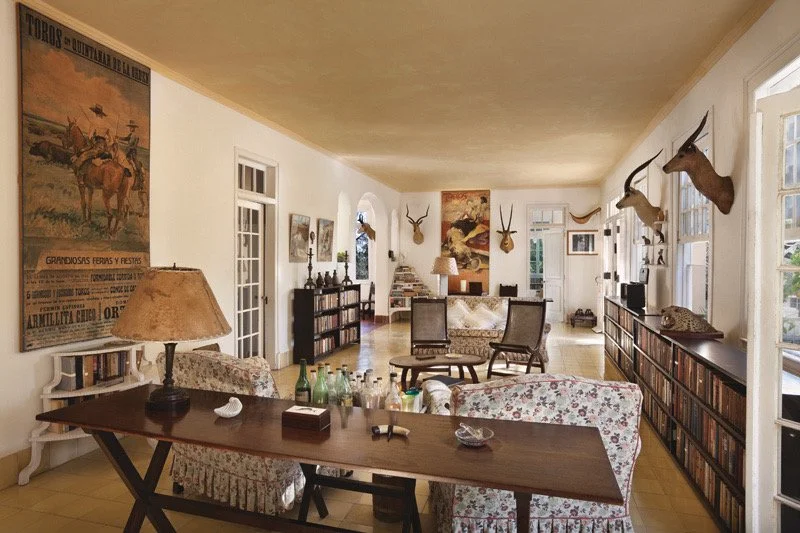
Ernest Hemingway’s lifestyle occupies a rarefied place in the cultural imagination, a position that refuses to age or diminish in relevance more than sixty years after his death.
At the core of Hemingway’s appeal was his insistence on authentic experience. He believed one should write what one truly knew, and in the pursuit of truth he placed himself in situations where life was felt in its purest forms. He knew the sting of saltwater in a cut earned while pulling in a giant marlin, and the electric flush of adrenaline when the horns of a two-ton bull lowered in the arena. For Hemingway, these were not aesthetic choices but existential ones. A real life, in his view, was shaped by action over abstraction, by an unmediated encounter with pleasure, pain, and meaning. In an era dominated by screens, filters, and algorithmic identities, Hemingway’s tactile, elemental way of living has become aspirational. For any initiate into “The Hemingway School,” the first lesson is simple: being fully present in one’s own life is the first step toward clarity, and perhaps enlightenment.
This reach toward authenticity extended to his appearance. Fashion shifts, technologies evolve, and tastes change, yet Hemingway’s personal style remains lodged in the zeitgeist with striking tenacity. His “look” was never curated, nor did he seek to appear interesting. His was an aesthetic rooted in experience, an inheritance from the late 19th century and from the hero of his youth, Theodore Roosevelt. Roosevelt blended an Eastern patrician polish with the rugged independence of the American West, creating a hybrid style that has been revived and rediscovered by successive generations. Ralph Lauren’s Double RL line owes much of its aesthetic DNA to this uniquely American inheritance, refracted through Hemingway. Legacy brands like Abercrombie & Fitch, Willis & Geiger, and Banana Republic also carried forward this spirit of functional adventure.
The power of this style lies in its direct connection to the wilderness of field, stream, and forest, a visual vocabulary that invites one to imagine themselves stepping into a scene of authentic adventure.
Another enduring element of Hemingway’s lifestyle was his dedication to becoming a true aficionado. Whether in his prose or his pursuits, he approached everything with seriousness of purpose and a relentless desire to read, learn, and experience whatever was required to achieve mastery. He polished sentences the way a gunsmith polishes steel. He revered the traditions of fishing guides, matadors, soldiers, and writers because he believed skill, earned slowly, methodically, and honestly, was the highest virtue. In an age racing to produce disposable goods and maximize quarterly shareholder value, Hemingway’s devotion to craftsmanship stands as a refreshing counterpoint.
He also lived with a rare mixture of humility and courage. He placed himself in extraordinary situations, front-line trenches, deserted beaches, unfamiliar cultures, to explore the fine line separating cowardice from heroism. His curiosity was voracious. He wanted to understand how people lived, fought, loved, and endured. In a world where internet culture thrives on commentary from the sidelines, Hemingway reminds us that knowledge is earned through participation, risk, and a willingness to be changed. This ethos resonates powerfully in an age wrestling with detachment and “performative masculinity”.
Equally timeless was the simplicity of his clothing. His closet held safari jackets, knit caps, fishing vests, and worn boots, not as a style template, but as functional tools for a life lived outdoors. This lack of artifice has aged better than any trend. Hemingway’s aesthetic endures because it was never intended to be fashionable; it was designed to serve a man of action, in motion, in pursuit of what he called “the true gen.”
Ultimately, Hemingway’s lifestyle endures because it was never about adventure alone, it was about paying attention to the life adventure delivers. His writing still teaches us to observe the world with clarity and courage, to strip away the unnecessary, and to find meaning in what is real and immediate. Hemingway’s lifestyle transcends time because it was not built for the moment. It was built as a framework for a well-rounded life, and for anyone seeking a life that feels true.