
A Farewell to Arms: Hemingway’s cultural turning point
The defining Story of Love, War, and Loss
On September 27, 1929, Charles Scribner’s Sons published Ernest Hemingway’s A Farewell to Arms, a novel that would become one of the defining works of his career and one of the most enduring stories to emerge from the First World War.

Hemingway was just 30 years old, but he was hardly unknown. The Sun Also Rises had established him as one of the leading voices of his generation, while Men Without Women had further demonstrated the distinctive economy and precision of his prose. With A Farewell to Arms, however, Hemingway reached an entirely new level of literary and popular success.
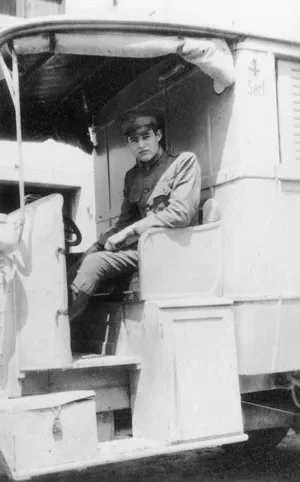
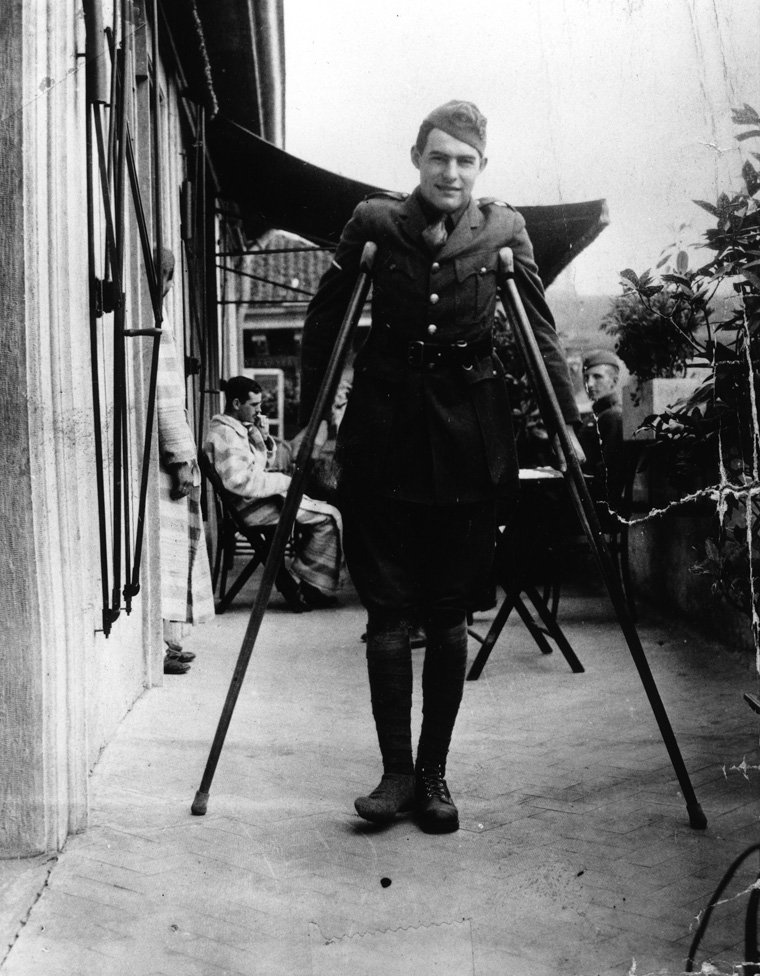
The novel follows Frederic Henry, an American serving as an ambulance driver with the Italian army, and his love affair with British nurse Catherine Barkley against the chaos of the First World War. Like much of Hemingway’s fiction, its foundations were drawn partly from experience. A decade earlier, the 18-year-old Hemingway had served as a Red Cross ambulance driver in Italy, where he was severely wounded by mortar fire and hospitalized in Milan.
Before the novel reached bookstores, readers had already begun encountering Frederic and Catherine. Scribner’s Magazine serialized A Farewell to Arms in six installments from May through October 1929. The magazine version was edited in places, with profanity removed and other passages altered.
The serialization also generated controversy. In June, Boston authorities banned the magazine from newsstands for the remainder of the serialization, declaring its content objectionable.
The controversy did little to slow Hemingway’s momentum.
When Scribner published the book edition on September 27, the first printing consisted of 31,050 copies. Within four weeks, sales had reached approximately 33,000. A month later they had passed 50,000, an extraordinary achievement made even more remarkable by the fact that the Wall Street Crash had occurred just weeks after publication.
A Farewell to Arms became Hemingway’s first true bestseller and helped make him financially independent. His reputation was no longer confined to literary circles. Hemingway was becoming a cultural figure as well as a celebrated writer.
The finished novel was the product of painstaking work.
Years later, Hemingway famously told The Paris Review that he had rewritten the ending 39 times before he was satisfied. When Hemingway’s surviving manuscripts were later examined, 47 different endings were identified, offering remarkable evidence of just how carefully he worked to achieve the apparent simplicity for which his writing became famous.
The novel’s reach was not without resistance. Fascist Italy prohibited its publication, in part because of Hemingway’s depiction of the disastrous Italian retreat from Caporetto. It was later banned in Ireland, and copies of Hemingway’s works were among those burned in Nazi Germany.
Yet the story continued to travel.
Hollywood moved quickly. In 1932, only three years after the novel’s publication, Paramount Pictures released A Farewell to Arms, directed by Frank Borzage and starring Gary Cooper as Frederic Henry and Helen Hayes as Catherine Barkley. The film received four Academy Award nominations, including Best Picture, and won Oscars for Cinematography and Sound.
The novel returned to the screen in 1957 in a lavish production starring Rock Hudson and Jennifer Jones, with Vittorio De Sica receiving an Academy Award nomination for Best Supporting Actor. Other stage and television adaptations further extended the story beyond the page.
But the lasting power of A Farewell to Arms comes from something deeper than its sales, controversy or adaptations.
Hemingway placed an intimate love story against the enormous machinery of war and allowed the two to collide. Frederic and Catherine attempt to create a private world for themselves while history, violence and chance continually intrude upon it. The result is a novel about war that ultimately asks larger questions about love, mortality, courage and what remains when the things we depend upon are taken away.
Its famous conclusion remains devastating precisely because Hemingway refuses to soften it. There is no grand speech and no easy consolation. Frederic simply confronts what has happened and walks back to his hotel alone in the rain.
That restraint became part of the novel’s extraordinary influence. Generations of writers would study Hemingway’s ability to leave emotion beneath the surface, allowing what was not said to carry as much weight as what appeared on the page.
A Farewell to Arms also marked an important transformation in Hemingway himself. The young writer who had emerged from the cafés of Paris and the expatriate world of The Sun Also Rises had produced something broader and more ambitious: a novel capable of reaching an enormous popular audience without abandoning the spare style that had made his work unmistakably his own.
Nearly a century later, Frederic Henry and Catherine Barkley remain together in the imagination of readers.
The uniforms, battlefields and ambulances belong to another era. The questions Hemingway asked through them do not.
How do we love in an uncertain world? How do we endure loss? And how do we continue when life refuses to provide the ending we hoped for?
That is why A Farewell to Arms continues to endure. Beneath the story of a particular war and a particular love affair, Hemingway found something timeless: the human desire to hold onto what we love, even when we know nothing can be held forever.