
Ernest and Hadley: A Marriage That Shaped Hemingway
Paris, Ambition, and the Woman Behind His Formative Years
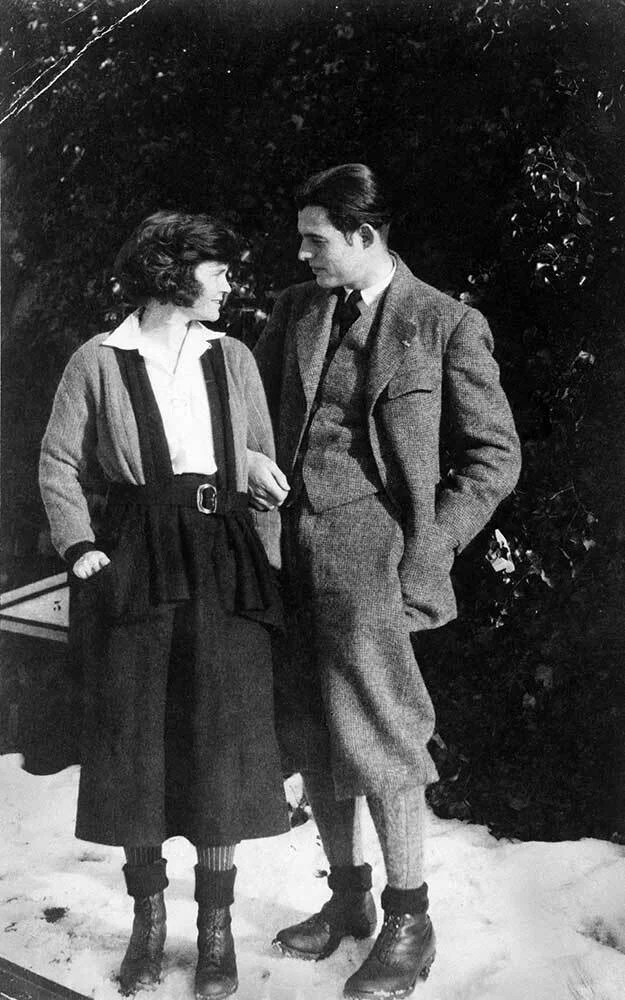
When Ernest Hemingway married Elizabeth Hadley Richardson on September 3, 1921, he was 22 years old, still years away from becoming one of the most famous writers in the world.
Hadley was nearly eight years older. The two had met the previous year in Chicago through mutual friend Katy Smith and quickly developed a relationship through letters. They married at a Methodist church in Horton Bay, Michigan, honeymooned at the Hemingway family cottage on Walloon Lake and briefly settled in Chicago.
Then came a decision that would change both of their lives.
Encouraged by writer Sherwood Anderson, Ernest and Hadley left America for Paris in December 1921. Hemingway worked as a foreign correspondent for the Toronto Star while attempting to establish himself as a fiction writer. Hadley provided not only companionship but financial stability through a modest trust fund, giving Hemingway something invaluable: the opportunity to write.

Together, they became part of the remarkable expatriate world of 1920s Paris. Hemingway encountered Gertrude Stein, Ezra Pound, F. Scott Fitzgerald and Sylvia Beach, among others, while he and Hadley traveled throughout Europe, skiing in Austria, attending the bullfights in Spain and spending time in Switzerland, Germany and Italy.
Their marriage also endured one of the legendary disasters of Hemingway’s early career.
In December 1922, Hadley was traveling to meet Ernest in Switzerland when a suitcase containing most of his unpublished manuscripts was stolen at Paris’s Gare de Lyon. The loss devastated Hemingway. Much of his early work disappeared forever, although the often-repeated versions of exactly what was lost and how Hemingway reacted have grown more complicated with subsequent scholarship.
In 1923, Hadley gave birth in Toronto to their only child, John Hadley Nicanor Hemingway, affectionately known as “Bumby” and later as Jack Hemingway.

Those years with Hadley coincided with Hemingway’s extraordinary development as a writer. Three Stories and Ten Poems, in our time, In Our Time and eventually The Sun Also Rises emerged during their life together. Hemingway scholar Scott Donaldson has described Hadley’s emotional and financial support as indispensable to Hemingway’s remarkable creative output during this period.
But as Hemingway’s literary world expanded, their marriage began to fracture.
In Paris, Hadley became friends with Pauline Pfeiffer, a stylish American journalist working for Vogue. Hemingway and Pauline eventually began an affair. By 1926, Hadley knew what was happening.
She proposed an unusual condition: Ernest and Pauline were to remain apart for 100 days. If, after that separation, they still wanted to be together, Hadley would agree to a divorce. The arrangement ultimately failed, and Hadley and Ernest filed for divorce in December 1926. Their marriage officially ended on April 14, 1927.
Despite the painful circumstances, their connection did not simply disappear. Hemingway gave Hadley and Bumby the rights and royalties to The Sun Also Rises, which he had dedicated to them. As parents, Ernest and Hadley remained connected for the rest of his life.
Decades later, Hemingway returned to those early years while writing A Moveable Feast. By then, the cheap Paris apartments, cafés, winters in Austria and days spent writing while Hadley waited nearby had become memories of a vanished world.
His recollections were complicated by regret, nostalgia and the passage of time, but Hadley remained central to the story.
Before the Nobel Prize, before the legend and before Hemingway became simply “Hemingway,” there was Ernest and Hadley.
They arrived in Paris as a young married couple with limited money and enormous hopes. By the time their marriage ended, Hemingway had written the book that would establish him as one of the defining voices of his generation.
Hadley had been there for nearly every step of the journey.